Recently I was part of the panel for mock interviews at LBRCE college. I interacted with 30+ students over the two days, all of them 4th year BTech AI/ML/DS students. One question came up again and again - how should I plan to crack a job?
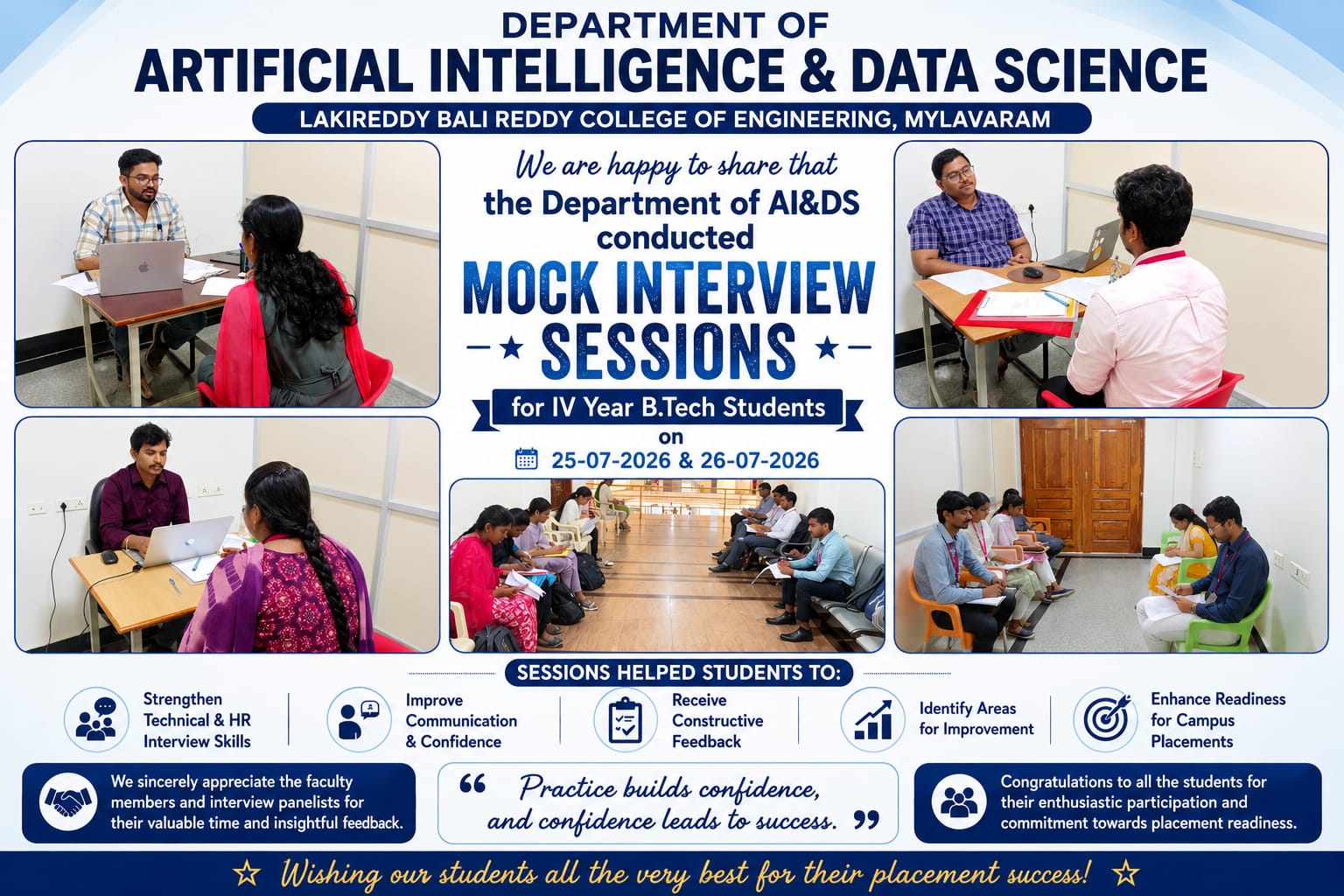
I gave them a template on the spot. I strongly believe this preparation should start on Day 0 of college. Here is the simple 4 point checklist I shared with them.
The 4 Point Checklist
1. No backlogs
This is non-negotiable. A backlog is one of the first filters companies use. Don't carry them into your placement season.
2. 3-4 projects / internships
You need real work to show, not just a resume line. Projects and internships are proof that you can build something, not just study for exams.
3. Hands on coding with sound DSA and OOPS
Try to do this without AI help. I say this because when AI writes the code for you, you are only reading it, not training your own neurons. The interview will test your neurons, not the AI's!
4. Know your campus recruiters
Be on top of which companies are coming to your campus and what their specific interview process looks like. Connect with a couple of seniors who have recently gone through the process. Their first hand experience is worth more than any generic guide.
What Makes a Good Project
Since projects came up a lot in these conversations, I want to add a bit more on what actually makes a project good.
Go deep, not wide
Doing fewer projects but going deeper gives you more value than doing too many shallow ones. Say you built a small project in a month. Instead of jumping to a fresh new project, think about how to add more features to it, how to improve its performance, how to make it better. A project is truly successful when someone other than you starts using it.
Do at least one project as a team
Working alone has its place, but make sure at least one of your projects is done as a team. Discussing and building together almost always results in a product that is greater than the sum of the individuals working on it.
The framework matters less than you think
Which specific technology or framework you use is less relevant than people think. If you are good with one, you pick up the underlying patterns. Those patterns are what help you learn a new framework much, much faster later on.
That's the checklist. Start early, and if you are already in your 4th year, start today.
Follow along on WhatsApp for more such posts - join the channel.